
What Digital Summit 2026 Taught Us About the Future of Marketing
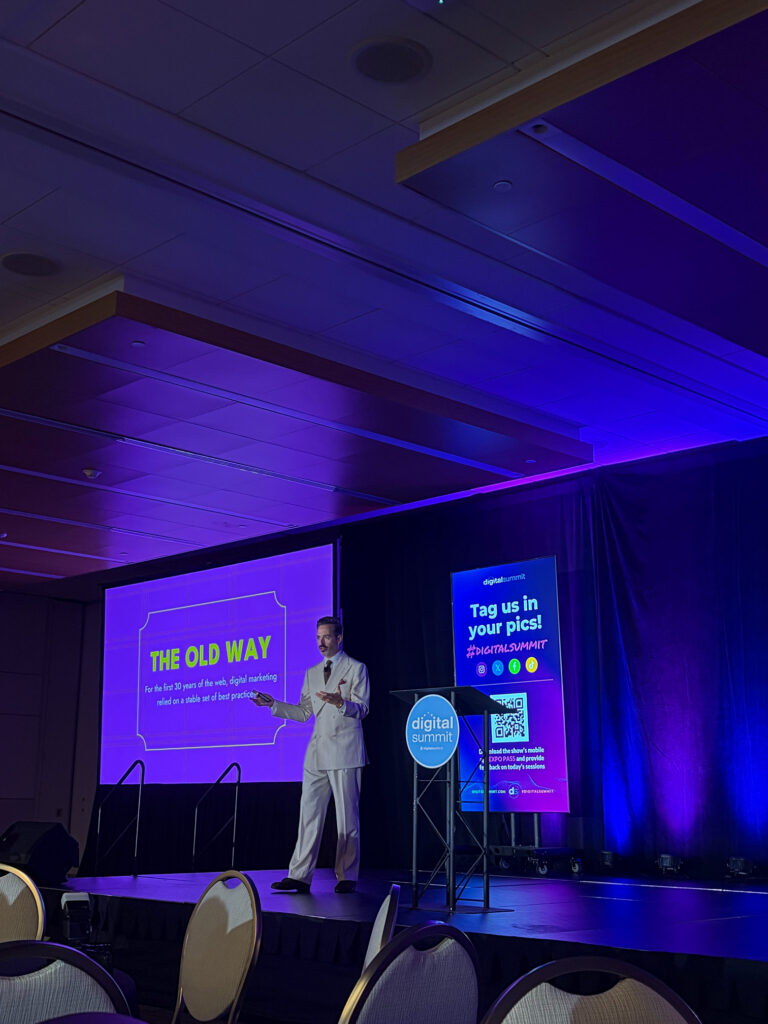
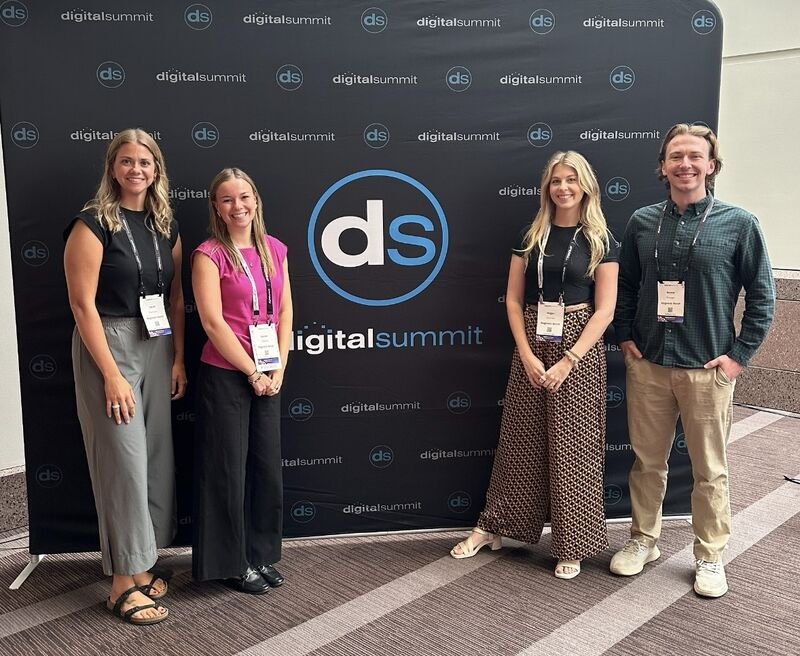
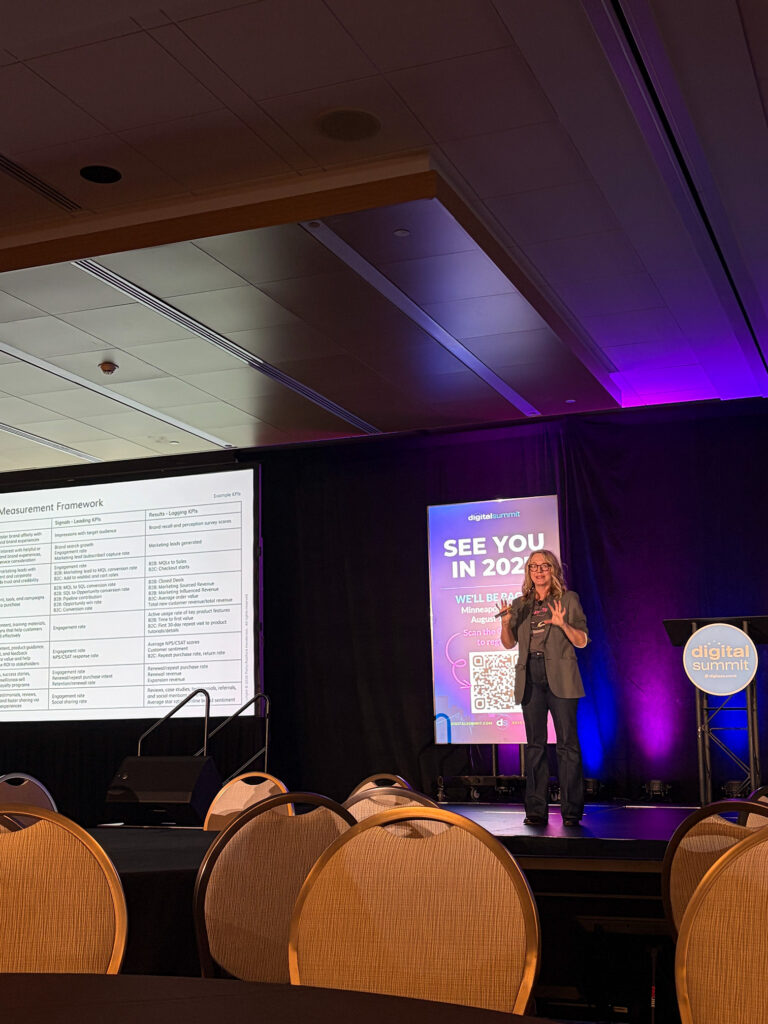
This August, a few members of the Magnetic North team and I attended Digital Summit Minneapolis, and we came away with a lot of valuable insights about how search and digital marketing are changing and what we can do to help our clients adapt.
For years, digital marketing followed a pretty straightforward formula of getting people to your website, tracking where they came from, measuring what they did and then optimizing from there. As we know, this model is changing.
Marketing is moving away from relying so heavily on website traffic, perfect attribution and rigid funnels. Attention, trust, customer progress, zero-click visibility, owned audiences and actual business outcomes are becoming much more important.
Search Is Still Growing, but People Aren’t Clicking Like They Used To
Here are a few numbers shared at Digital Summit by Rand Faskin at SparkToro about zero-click marketing that caught our attention:
- Traffic to the open web has fallen about 10% since 2024
- Roughly two-thirds of searches happen on mobile.
- Only about 32% of Google searches result in a click.
- Zero-click searches have experienced some of the fastest growth over the past two years.
People haven’t stopped looking for information. They’ve simply gotten better at finding answers without visiting a website.
That doesn’t mean website traffic is suddenly meaningless. It can still tell us whether people are finding the site, which content attracts interest and how visitors move through it. But traffic is now only one piece of a much bigger picture.
As marketers, we need to look beyond sessions alone and consider metrics like
- search and AI visibility
- Social engagement
- Email growth
- Qualified leads
- Sales opportunities
- Revenue
The right KPI depends on what role that marketing touchpoint is playing in the buyer journey.
Your Website Is No Longer Your Only Homepage
Digital Summit reinforced something we’ve already been seeing firsthand, people aren’t always discovering companies through traditional search anymore.
In some cases, your website might actually be one of the last places someone visits in their buyer journey.
What Google says about your company still matters, but so does what LinkedIn, ChatGPT, Reddit, YouTube and other platforms say about you.
Your brand now exists across an entire digital ecosystem, not just on the pages you own.
The Buyer Journey Is No Longer a Straight Line
The traditional marketing funnel suggests that customers move neatly from awareness to consideration to decision, but actual buying behavior isn’t that straightforward.
Someone might see your company on LinkedIn today, hear your name from a coworker three months from now, search for a related problem on Google, watch one of your videos and eventually return directly to your website when they are ready to talk.
The challenge is determining which channel generated that lead, and increasingly, there may not be just one answer.
A strong theme throughout Digital Summit was that influence happens everywhere.
The question marketers need to ask is shifting from:
“Which channel gets credit?” to: “What interactions helped move this customer toward a decision?”
That is a much more realistic picture of how modern marketing works. One of our biggest takeaways was that reporting needs to better reflect all of those decision points instead of focusing only on the final conversion.
Attribution Is Getting Harder
As the buyer journey becomes more complicated, attribution becomes harder as well.
Platforms are increasingly keeping users inside their own ecosystems.
- Referral information gets lost.
- AI platforms don’t always pass traditional referral data.
- Traffic influenced by another platform may eventually be categorized as “Direct.”
- In some cases, there isn’t even a link to click.
Marketing attribution is increasingly an estimate rather than an exact number. Someone could watch three of your videos, read your LinkedIn posts for six months and then type your URL directly into their browser when they are ready to buy. Analytics may show that journey as one direct website visit, missing everything that happened before it.
Instead of blindly accepting what a platform says it generated, marketers need to step back and look at the entire business. Is marketing actually changing customer behavior? Is it helping create demand? Are the right opportunities entering the pipeline?
Those questions matter more than assigning 100% of the credit to one channel.
What Should Marketers Do About It?
So, what do marketers actually do about all of this, and how do we move forward?
We came away from this year’s Digital Summit with a few ideas that we can start putting into practice right now.
1. Build Visibility Beyond Your Website
We can’t rely solely on organic or paid website traffic to generate awareness and leads anymore.
Your company needs to show up across the places your customers are already searching, even if you don’t control those platforms.
That could mean LinkedIn, Reddit, YouTube, industry publications, review sites, directories or the sources AI platforms use when answering questions about your industry.
One stat shared at Digital Summit found that posts on platforms like LinkedIn, Twitter/X and Reddit could receive 9–12x more reach when they did not contain an external link.
Platforms want people to stay on their platforms, so sometimes the best strategy isn’t asking someone to click back to your website. It is giving them the answer right where they are.
There is also a bigger opportunity here around third-party credibility. What your website says about your company matters, but what other sources say about you can carry even more weight.
Reviews, mentions, partnerships, industry articles and conversations about your brand all help build the trust and visibility that ultimately influence a buying decision.
2. Make the Click Feel Seamless
When someone does click, especially from a paid ad, the experience needs to make sense immediately.
If your ad promotes a specific service, offer or message, the landing page should feel like a direct continuation of that ad.
The messaging, promotion, CTA, visuals and overall experience should stay consistent.
This is especially important if that click is someone’s first interaction with your company. You don’t want them landing on a page and having to figure out whether they are in the right place or what they are supposed to do next.
Audit your paid campaigns and landing pages together. The goal should be a seamless ad-to-page experience that removes confusion and makes the next step obvious.
3. Create Search-Led Content, Then Use It Everywhere
More platforms don’t necessarily mean you need to come up with more ideas.
Instead, start with the questions your customers are actually searching for and build strong, useful content around them.
One in-depth piece of content can then become:
Blog → Email → LinkedIn Post → Video → Short Clips → FAQ
Rather than creating something once and moving on, think about every place that idea could be useful.
For B2B companies especially, this makes content creation much more manageable while also creating a more consistent message across your marketing.
Our team also talked about treating your website as a searchable knowledge base. Identify the questions you want your company to be known for answering, create strong resources around those topics and then bring those answers to the other platforms where your audience spends time.
4. Invest in the Audience You Own
Email remains one of the few channels where you have a direct relationship with your audience. Google can change its search results and LinkedIn can change its algorithm, but your email list is made up of people who have chosen to hear from you.
As other channels become less predictable, building and engaging your owned audience becomes even more valuable.
Use the platforms you don’t own to earn attention. Then use the channels you do own to build and maintain the relationship.
Marketing Has Become Less About the Click and More About the Influence
Marketing today is about showing up repeatedly throughout a longer and much less predictable customer journey.
Some of those interactions will happen on your website, while others won’t.
The businesses that adapt will stop asking whether every piece of marketing generated an immediate click and start asking better questions:
- Are we showing up where our customers research?
- Are we answering the questions they care about?
- Are we building trust before they are ready to buy?
- When they finally are ready, are we one of the companies they already know?
The challenge for marketers now is understanding that visibility goes far beyond website traffic alone.
How Magnetic North Can Help Move the Needle
One of the things we value most at Magnetic North is constantly looking for new ways to add value for our clients.
Digital Summit 2026 gave us another opportunity to do exactly that. A lot of what we heard reinforced changes we were already seeing, while other ideas pushed us to think differently about how we approach strategy, content, reporting and the buyer’s journey.
Marketing is going to keep changing, and so will the way people search for and discover businesses.
If you’re looking for an agile marketing partner that is committed to learning, adapting and helping you navigate those changes, we’d love to talk.
Contact Magnetic North and let’s keep moving your marketing needle.

digital marketing specialist
ABOUT THE AUTHOR
Lauren Rausch
Since joining Magnetic North, Lauren has immersed herself in the evolving world of AI and shifting consumer search behaviors. She helps develop smart, forward-thinking content strategies that position Magnetic North and our clients ahead of the competition in AI-driven search. Adaptable and always ready for a new challenge, she brings a positive, solutions-focused approach to every project. Lauren enjoys meeting new people and loves the variety each client brings. With a strong foundation in digital marketing and data analysis, she thrives on turning metrics into meaningful insights and recommendations. Collaborative and optimistic, Lauren is a team player who excels in creative, fast-paced environments and brings ideas to life through impactful, visually engaging content.